
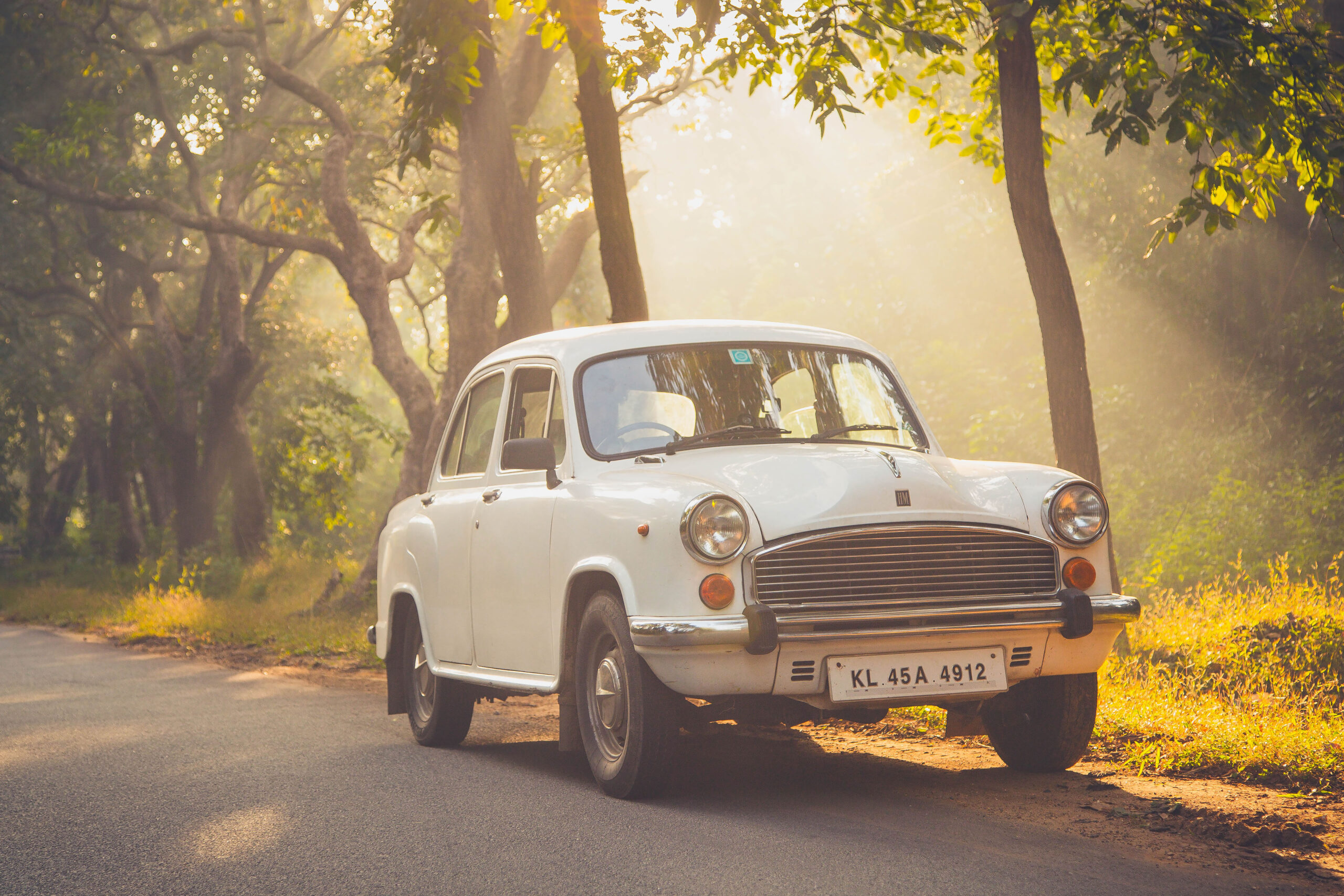
Introduced in India in 1957–1958, the Hindustan Ambassador was a licensed version of the British Morris Oxford Series III. It was one of the longest-running car models in history, produced from 1958 to 2014. Known as the “King of Indian roads,” it was preferred due to its robustness, spacious cabin, and appropriateness for usage by the government and taxis.
A more potent engine and a diesel option were among the minor improvements made to its largely unaltered design, which still included chrome bumpers and round headlamps. Its retro beauty notwithstanding, it became antiquated, and manufacturing ceased in 2014. In 2017, Peugeot purchased the brand.
Throughout its existence, the Hindustan Ambassador underwent seven major iterations: Mark I, II, III, IV, Nova, 1800 ISZ, and Avigo. Although minor mechanical or design modifications were made in each iteration, the general structure stayed mostly the same, maintaining its distinctive appearance while progressively adjusting to shifting market and regulatory requirements.
In order to improve performance and fuel efficiency, Hindustan Motors teamed up with Isuzu of Japan to acquire cutting-edge diesel and gasoline powertrains for the Ambassador. This partnership helped modernize the automobile in its later years while maintaining its iconic look by introducing the 1.8L Isuzu gasoline engine and enhanced diesel versions.

Source – best-selling cars blog
Special Qualities of the Ambassador of India
Durability & Sturdiness – The Ambassador’s early unibody design and sturdy steel frame made it extremely durable and rugged, making it perfect for Indian road conditions.
The World’s Greatest Taxi – Top Gear once referred to it as “the best taxi in the world” because of its comfort and dependability, despite its poor fuel economy.
The Most Comfortable Ride -Passengers appreciated it because of its “sofa-like” back bench seats and superb suspension, which provided a comfortable, even on bumpy roads.
Luxuriance for High-Level Officials – The Ambassador was the “byword in luxury” for ministers and VIPs at its height because of its comfortable back seats and generous legroom.
Huge Boot Space – The car’s vast, deep trunk was renowned for being big enough to lie down in, making it ideal for extended trips or transporting heavy objects.
India’s Cultural Icon – From Delhi to Kolkata, the Ambassador became more than just a vehicle; it became a representation of India’s identity after independence.
A component of childhood in India – It is extremely sentimental for generations since many Indians connect it to their early years, school rides, and family vacations.
Official Status Symbol – Politicians, attorneys, and bureaucrats all frequently utilized cars, which came to represent luxury and authority visually.
Common in Popular Culture – The Ambassador frequently portrayed an older, more straightforward India in TV series, movies, and books.
Classic Appeal – Collectors and enthusiasts of vintage cars are drawn to its rounded, somewhat dumpy, yet endearing look.

Source – ZigWheels
About the Exterior
The Ambassador’s exterior was a quintessential British design from the 1950s. It was a boxy vehicle with chrome trim and big fenders. Round headlamps and a noticeable vertical grille were features of the front end; early vehicles had tail fins at the back, which persisted until the final models.
The Ambassador’s appearance stayed mostly the same for decades since Hindustan Motors never made significant changes to the vehicle’s design. The silhouette, which had a tall bonnet, an upright windshield, and a roof, retained its classic character despite minor upgrades in subsequent years, such as plastic bumpers and improved lighting.

Source – Gaadiwala
About the Interior
The Ambassador’s interior was roomy despite its simplicity. Usually, it had front and rear bench seats with vinyl upholstery that could easily seat up to six people—two in front and three in back. The majority of the controls were conveniently located near the driver, who sat on a broad bench and operated a column-mounted gear lever.
Basic and analogue gauge clusters typically included a speedometer and a few warning lights. Better upholstery, power steering, air conditioning, and a plastic dash improvement were among the creature pleasures offered to higher-end versions (such as the Ambassador Grand in the 2000s).
In conclusion
The Hindustan Ambassador remains an iconic symbol of Indian automotive history, representing over 50 years of reliability and national pride. Though production ended in 2014, its legacy lives on through films, cultural memory, and vintage car enthusiasts. Once a marker of stability and patriotism, the Ambassador is fondly remembered as “India on wheels,” a car whose impact far exceeded its mechanical specs.
Fascinated by old Stars. You have reached your destination. At CLcompany, we have curated pictures, write-ups, and more about the legendary journey of Cars. If you are looking to share your thoughts on Classic Cars, do check out the writer’s section on the CLcompany website.
Share the Passion with the world!