
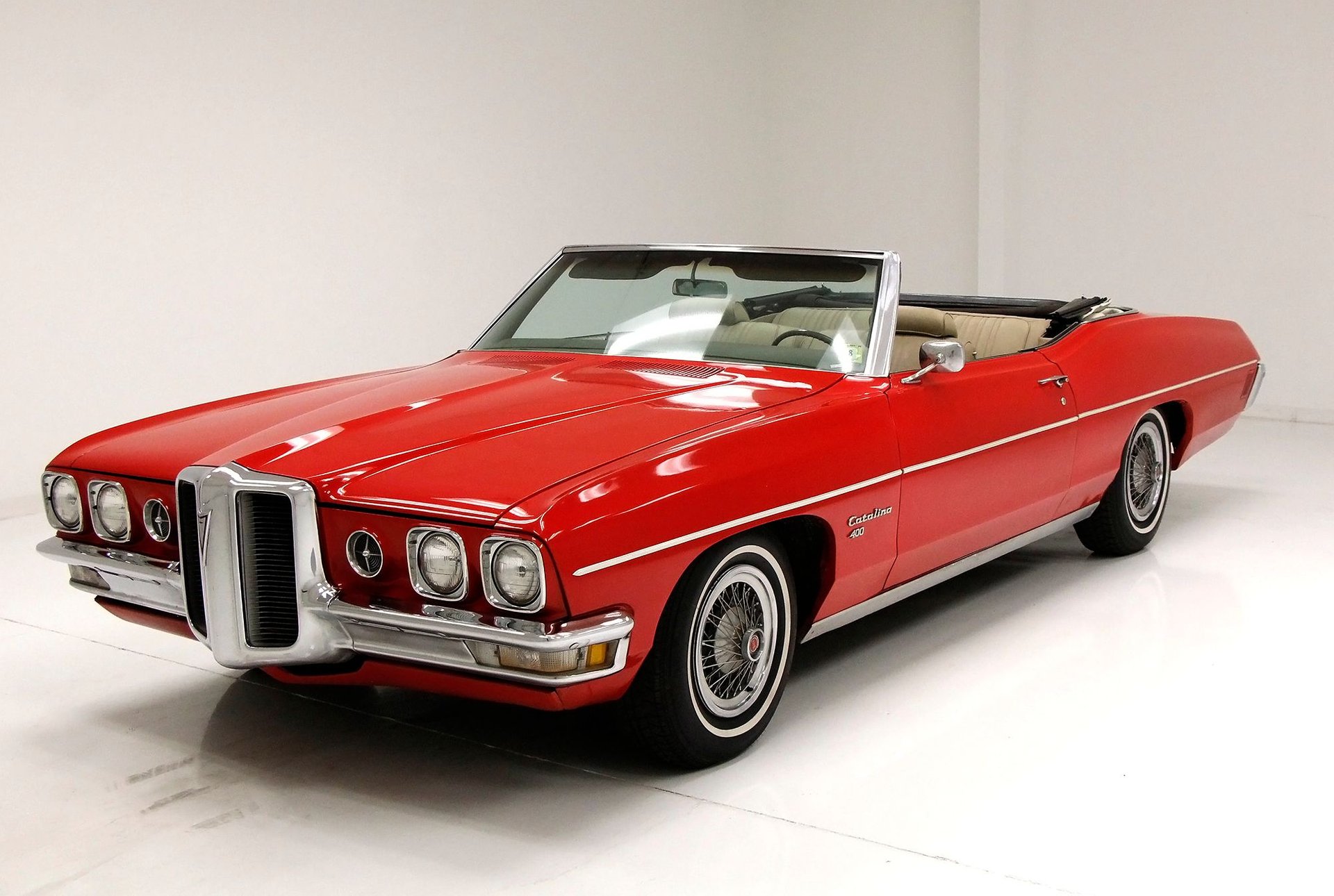
- The Evolution of Pontiac Catalina The 1950 Chieftain Series 25/27 hardtop, Pontiac’s flagship model at the time, introduced the moniker “Catalina” for the first time.
- Initially known as “hard-top convertibles,” these cars had premium convertible features in addition to pillarless door and window design.
- This fixed-roof design had the benefit of feeling athletic and airy without the cost and disadvantages typically associated with convertibles.
- From 1950 to 1958, all Pontiac hardtops were referred to as “Catalinas” except for the Bonneville in 1958.
- At launch, it was powered by a flathead straight-eight engine; four years later, Pontiac’s new 287 CID OHV V8 would replace it.
The Evolution of Pontiac Catalina
The 1950 Chieftain Series 25/27 hardtop, Pontiac’s flagship model at the time, introduced the moniker “Catalina” for the first time. In 1954, it was added to the Star Chief. Initially known as “hard-top convertibles,” these cars had premium convertible features in addition to pillarless door and window design. This fixed-roof design had the benefit of feeling athletic and airy without the cost and disadvantages typically associated with convertibles.
From 1950 to 1958, all Pontiac hardtops were referred to as “Catalinas” except for the Bonneville in 1958. At launch, it was powered by a flathead straight-eight engine; four years later, Pontiac’s new 287 CID OHV V8 would replace it. In 1954, a one-piece windshield was new. In 1956, a padded safety dash was made available.
The birth of Pontiac Catalina
The Catalina was given full model status in 1959 and came with a Safari station wagon, a convertible, and sedans and hardtops with two or four doors. It would be impossible to tell the Catalina narrative without mentioning the well-known Pontiac artists Fitzpatrick and Van Kaufman.
Their product illustrations were arguably the best the Motor City has ever seen. They were not beyond using some artistic license, even though their work was accurate and had a practically photorealistic style
Source – cars and racing stuff
1959–1960
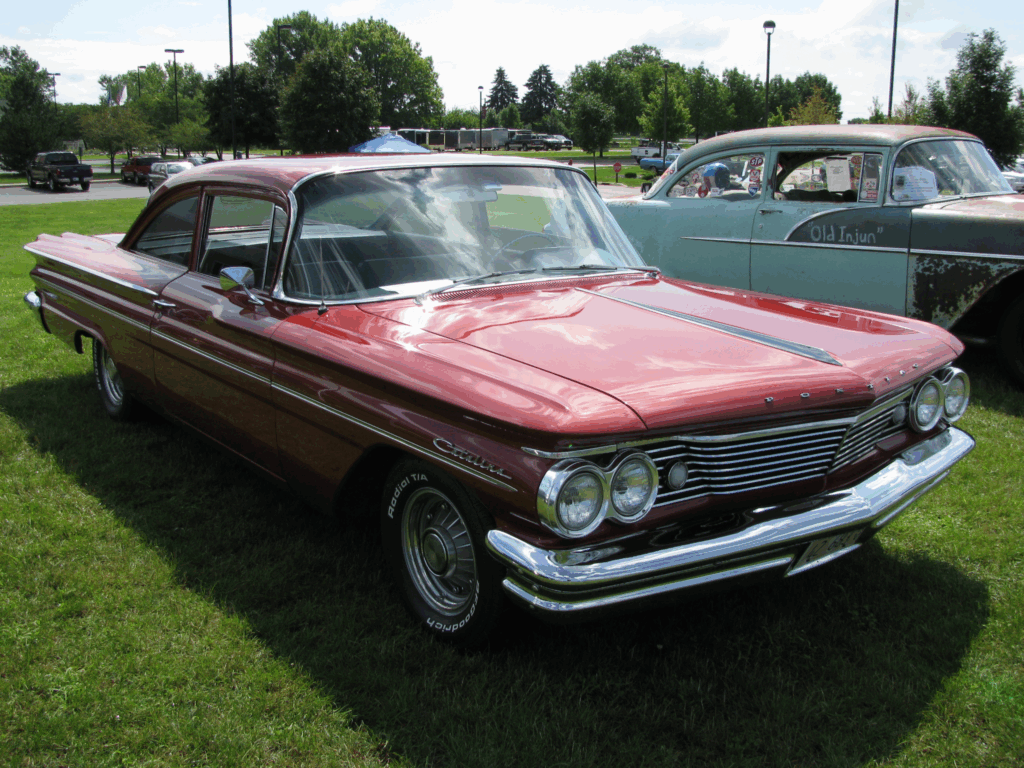
In 1959, Pontiac enlarged the Bonneville into a full premium range, moved the Star Chief to the mid-line, and replaced the entry-level Chieftain with the Catalina. Despite being the least expensive full-size Pontiac, the Catalina was only marginally less expensive than the Buick LeSabre and Oldsmobile 88 and had more equipment and richer trim than the Chevrolet Impala. Despite being less expensive, it was better equipped thanks to a stronger 389 cu in V8, more amenities, and a better four-speed Hydra-Matic transmission.
source – cars and racing stuff
1961–1964
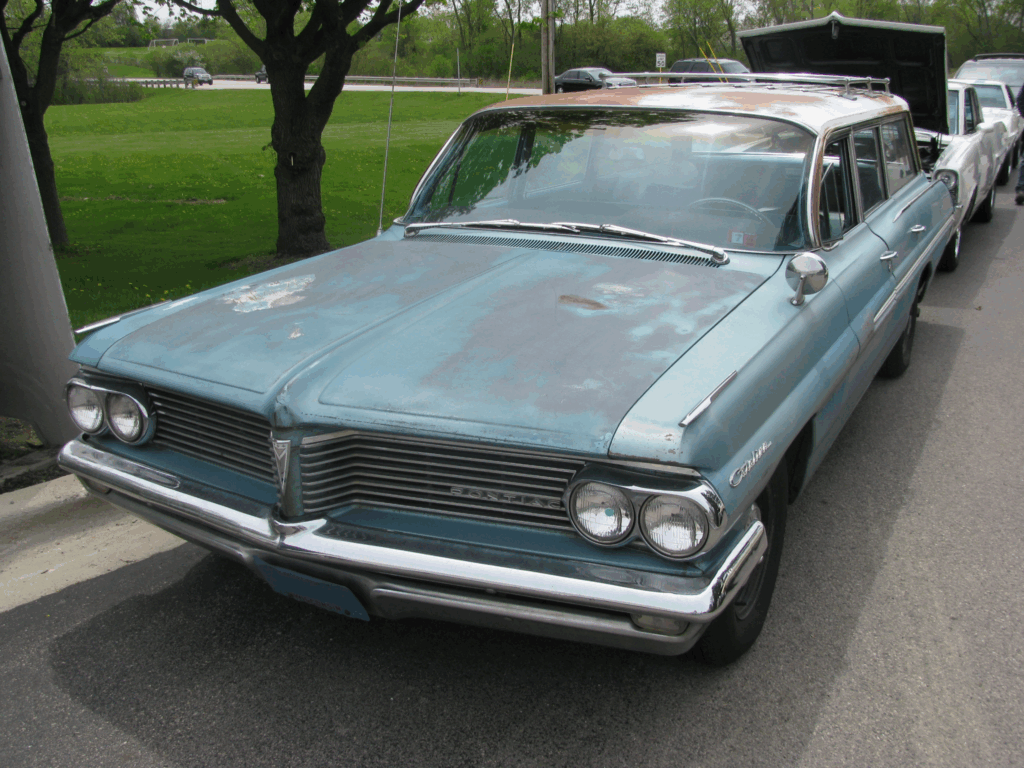
In order to increase safety and cabin capacity, Pontiac full-size models were completely redesigned in 1961 with squared-off style, the return of the split grille, and a new Torque-Box perimeter frame. The wheelbase, length, width, and track were all smaller and lighter than those of the 1960 versions. On two-door hardtops, bubbletop roofs persisted, rooflines were squared off, and wraparound windshields were swapped out for flatter glass. A “new wide track” identity was highlighted in the upgrade.
source – cars and racing stuff
1965–1970
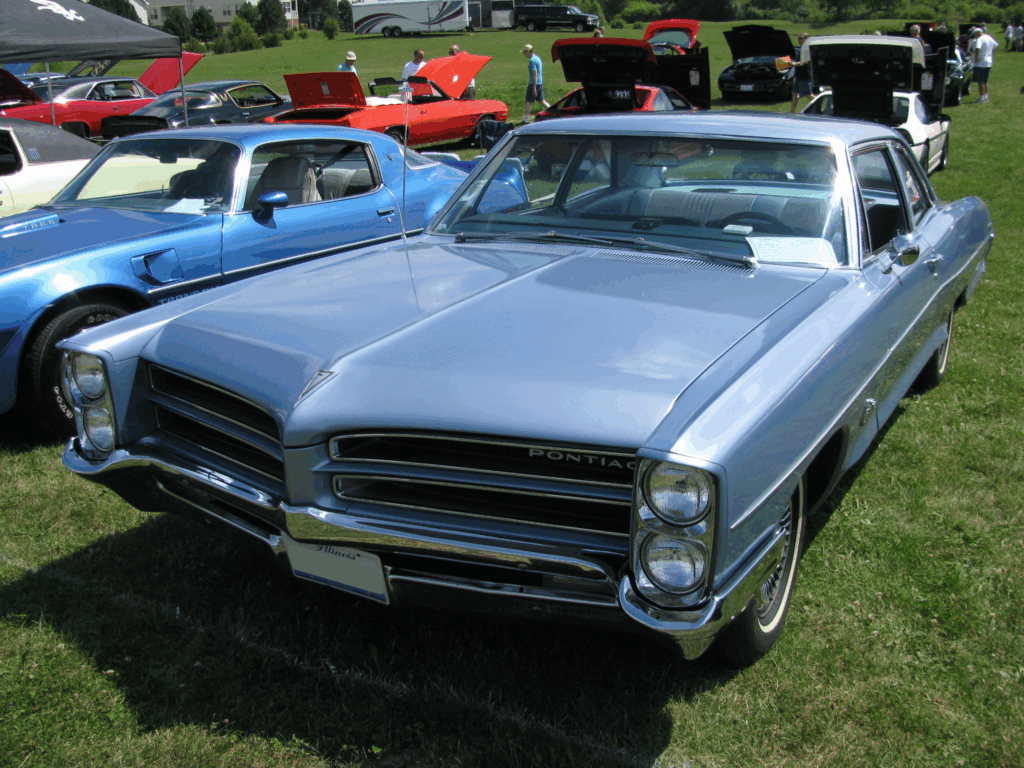
In 1965, Pontiac full-size cars were fully restyled with sleek “Coke-bottle” body lines, fastback hardtop roofs, and a longer 121-inch wheelbase. The outdated Roto Hydramatic was replaced by the new three-speed Turbo-Hydramatic automatic transmission, a torque-converter design similar to Chrysler and Ford units. It introduced the now-standard “P-R-N-D-S-L” shift pattern and shared no engineering with earlier Hydramatics.
1971–1976
Long-hood style, “fuselage” lines, safer double-shell roofs, and flush pull-up door handles were all part of the 1971 complete redesign of Pontiac’s full-size series, which included the Catalina. With longer frames for Bonneville, Grand Ville, and Safari wagons, Catalinas rode a wheelbase of 123.4 inches. By 1973, a new Catalina Brougham that had more expensive embellishments had been phased out. In 1972, the Catalina convertible was discontinued. Executive and Bonneville wagons were replaced by the more expensive Grand Safari, and the Catalina Safari was renamed Pontiac Safari. Wagons were rearranged into a distinct series.
1977–1981
In order to increase fuel efficiency, Pontiac reduced the dimensions of the Catalina starting in 1977. Sedans and coupes now come standard with a Buick 231 V6, while several Pontiac, Buick, Oldsmobile, and Chevrolet V8S are available based on the year and emissions regulations. The Safari wagon changes to coil springs and a more straightforward two-way tailgate. Engines from other GM brands were utilised because Pontiac V8S were prohibited in California due to emissions regulations. After selling more than 3.8 million since its 1959 launch, Catalina’s manufacture came to an end in 1981.
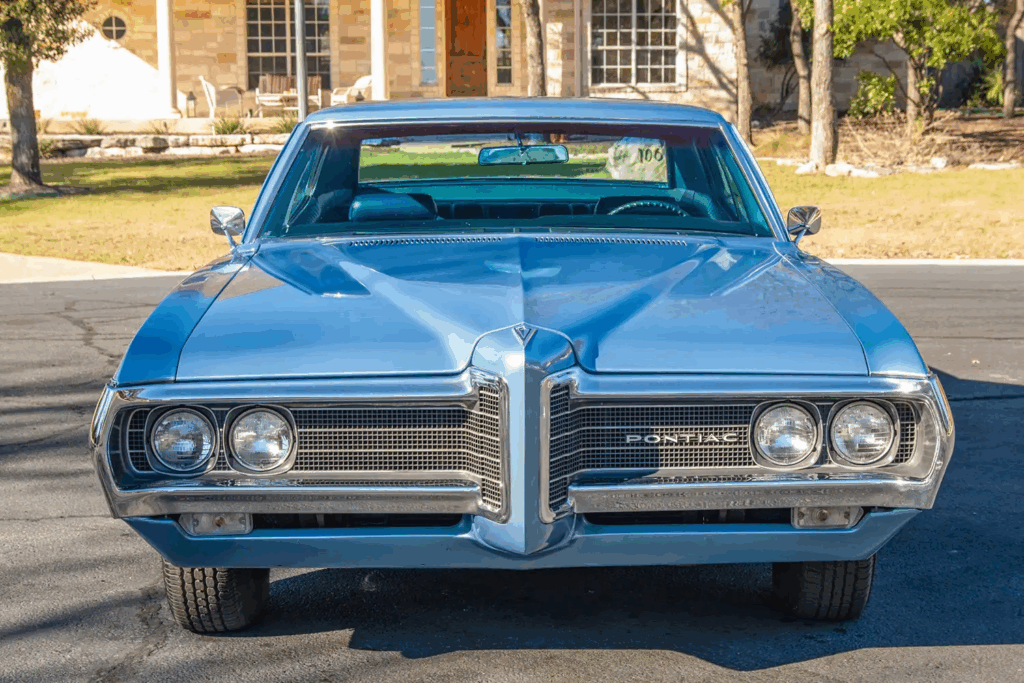
source – Wheelz.me
The Legacy of Pontiac Catalina
As one of the most well-liked full-size automobiles in America, the Pontiac Catalina left a lasting impression. It was first introduced in 1959 and helped define Pontiac’s brand during its heyday by fusing performance, style, and value. It provided affordable luxury and a commanding presence on the road because of its wide-track stance, aggressive styling, and potent V8 engines.
It sold over 3.8 million copies, making it a cultural mainstay for many years. Before the full emergence of the muscle car era, Pontiac’s performance reputation was also impacted by the Catalina. The conclusion of production in 1981 signalled the end of Pontiac’s conventional full-size period, leaving a legacy of creativity, appeal, and timeless style.
Fascinated by old Stars. You have reached your destination. At CLcompany we have curated pictures, write-ups, and more about the legendary journey of Mercedes Cars. Share the passion with the world.