

- The Tata Sierra stands as a groundbreaking milestone in Indian automotive history, representing the country’s first indigenous attempt at creating a modern sport utility vehicle.
- Launched in 1991, this distinctive three-door SUV combined bold styling with practical engineering, showcasing Tata Motors’ ambition to move beyond commercial vehicles into the passenger car segment.
- The Tata Sierra, with its unique design, innovative features, and pioneering spirit, remains a cult classic among Indian car enthusiasts who recognize its significance in shaping the nation’s automotive landscape.
- Clcompany is delighted to explore the facts about this audacious Indian original that dared to be different.
- Flashback The Tata Sierra’s story begins in the late 1980s when Tata Motors, then known primarily for commercial trucks and the utilitarian Tata Mobile, recognized an opportunity in the emerging Indian SUV market.
The Tata Sierra stands as a groundbreaking milestone in Indian automotive history, representing the country’s first indigenous attempt at creating a modern sport utility vehicle. Launched in 1991, this distinctive three-door SUV combined bold styling with practical engineering, showcasing Tata Motors’ ambition to move beyond commercial vehicles into the passenger car segment. The Tata Sierra, with its unique design, innovative features, and pioneering spirit, remains a cult classic among Indian car enthusiasts who recognize its significance in shaping the nation’s automotive landscape. Clcompany is delighted to explore the facts about this audacious Indian original that dared to be different.
Flashback
The Tata Sierra’s story begins in the late 1980s when Tata Motors, then known primarily for commercial trucks and the utilitarian Tata Mobile, recognized an opportunity in the emerging Indian SUV market. With economic liberalization on the horizon and a growing middle class seeking lifestyle vehicles, Tata Engineering and Locomotive Company (TELCO) embarked on an ambitious project to create India’s first homegrown SUV.
Development commenced in 1988 under the guidance of Tata’s engineering team, who drew inspiration from contemporary international SUVs while adapting the design for Indian conditions and manufacturing capabilities. The vehicle was internally coded “TL” (Tata Light) and aimed to offer a more refined alternative to the rugged Tata Mobile while maintaining off-road capability suited to India’s challenging road infrastructure.
The Sierra made its public debut at the 1991 Auto Expo in New Delhi, where its radical styling and promise of indigenous engineering generated significant excitement. The name “Sierra” evoked images of mountain ranges and adventure, positioning the vehicle as an aspirational choice for India’s emerging adventure-seeking demographic. Production began at Tata’s Pune facility in late 1991, with initial deliveries commencing in 1992.
The timing proved challenging—India’s economy was transitioning, import restrictions remained strict, and the automotive market was still relatively nascent. Despite these hurdles, the Sierra carved out a niche among professionals, entrepreneurs, and government officials who appreciated its unique character and Indian heritage. Production continued until 2003, with the Sierra achieving modest commercial success but lasting cultural impact.
Years in production – 1991 to 2003
The Design
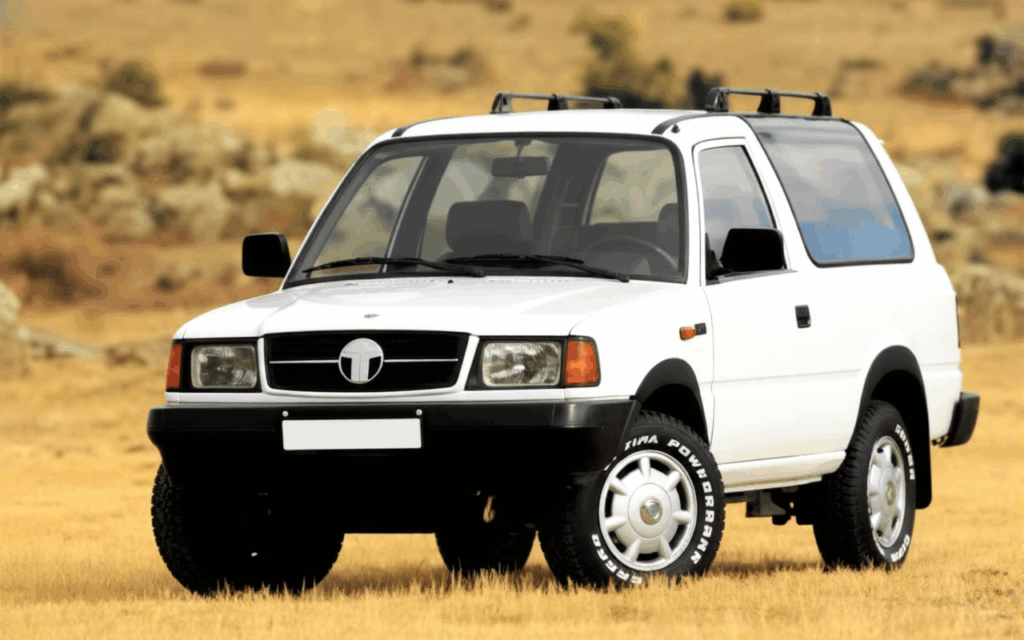
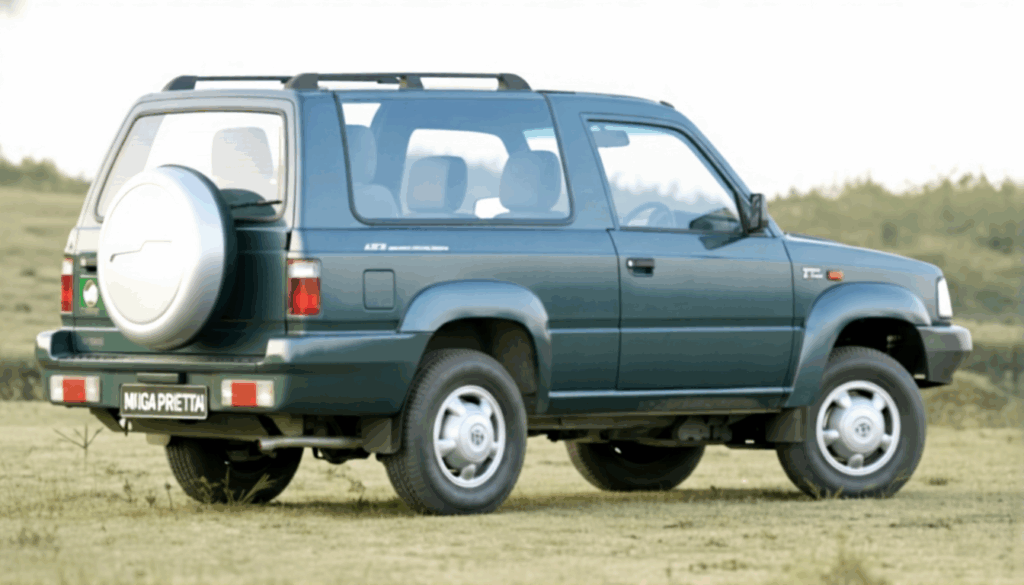
The Tata Sierra’s design was revolutionary for its time, featuring bold styling that stood apart from anything else on Indian roads. The most distinctive element was its wraparound rear glass hatch—a large, curved glass panel that extended from the roofline down to the bumper, creating a greenhouse effect and exceptional visibility. This design choice, inspired by contemporary American SUVs like 2nd Gen. Ford Bronco, became the Sierra’s signature feature and remains instantly recognizable decades later.
The front fascia featured a vertical grille with horizontal slats, rectangular headlamps, and a prominent hood that communicated ruggedness. The three-door configuration with a single rear-hinged cargo door emphasized the vehicle’s utility focus while maintaining a relatively compact footprint suitable for crowded Indian urban environments. Ground clearance of 210mm ensured the Sierra could tackle India’s underdeveloped road infrastructure, unpaved village roads, and occasional off-road excursions.
Power came from Tata’s 2.0-liter naturally aspirated diesel engine, producing a modest 68 horsepower and 137 Nm of torque. While the power figures seem minimal by contemporary standards, the torquey diesel proved adequate for Indian driving conditions, delivering reasonable fuel economy and the reliability essential for markets with limited service infrastructure. The engine mated to a five-speed manual transmission, with power sent to the rear wheels in standard configuration.
A four-wheel-drive variant was offered but remained relatively rare due to its higher cost.
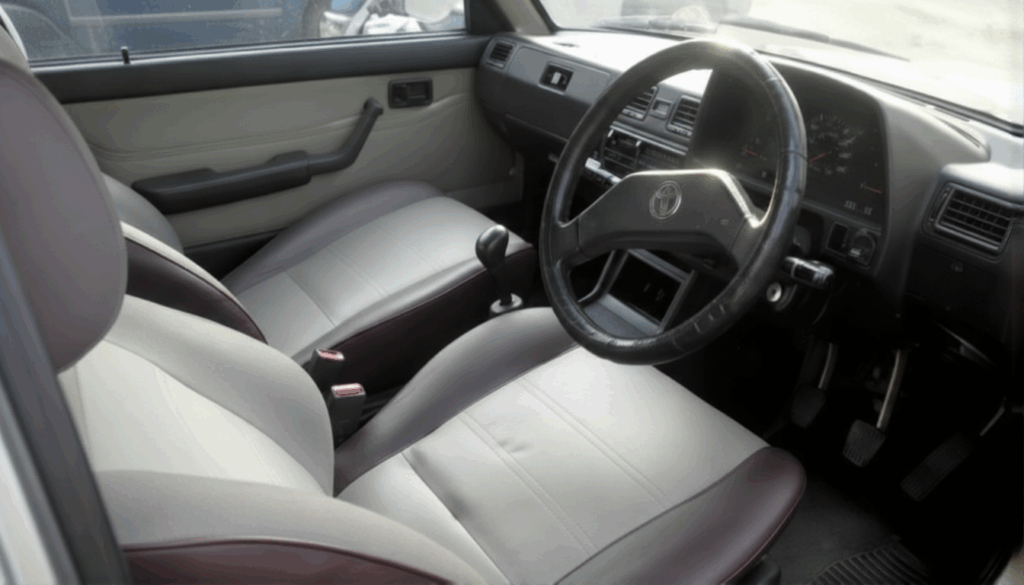
The interior reflected early 1990s Indian automotive standards—functional rather than luxurious. Vinyl upholstery, basic instrumentation, and straightforward controls defined the cabin. However, the Sierra offered features considered premium for its time, including power steering (optional), air conditioning, tachometer and tinted glass. The high seating position and large windows provided commanding visibility, while the spacious cabin could accommodate five occupants reasonably comfortably.
Later in its production run, Tata introduced the Sierra Turbo, addressing criticism about the base model’s leisurely performance. The turbocharged 2.0-liter diesel engine boosted output to 90 horsepower, transforming the driving experience and making the Sierra genuinely enjoyable on highways. The Turbo variant featured distinctive badging, alloy wheels, and minor styling enhancements that distinguished it from standard models.
Top Specifications of Tata Sierra (Turbo variant)
- Displacement – 1948 cc
- Power – 90 bhp @ 4500 rpm
- Torque – 190 nm @ 2000 rpm
- Transmission – 5-speed manual
- Drivetrain – Rear-wheel drive / Four-wheel drive (optional)
- Ground Clearance – 210 mm
- Fuel Tank Capacity – 55 liters
Interesting Facts
- The Tata Sierra was the first Indian vehicle to feature a rear window demister as standard equipment—a seemingly minor detail that demonstrated Tata’s attention to practical features often overlooked by other Indian manufacturers of the era.
- The Sierra served as the official vehicle for several government departments and police forces, particularly in mountainous regions where its ground clearance and diesel reliability proved advantageous. These institutional purchases helped establish credibility for Tata’s passenger vehicle ambitions.
- In export markets Tata Sierra was sold as Tata Telcoline or Tata Gurkha. SIERRA brand name was owned by Ford Motors outside India.
- Despite discontinuation in 2003, the Tata Sierra has experienced a renaissance among enthusiasts. A dedicated community of owners maintains, restores, and modifies surviving examples, with some creating impressive resto-mods featuring modern engines, suspension upgrades, and contemporary amenities.
The Legacy
The Tata Sierra’s greatest achievement wasn’t commercial success—it sold approximately 20,000 units over its 12-year production run—but rather demonstrating that Indian manufacturers could conceive, develop, and produce distinctive, contemporary vehicles. The Sierra proved that Indian automotive ambitions extended beyond license-built designs and commercial vehicles.
Today, the Sierra enjoys cult classic status in India’s burgeoning classic car scene. Well-preserved examples appear at vintage car rallies, while resto-modded versions showcase modern interpretations of the distinctive design. Tata Motors has acknowledged this enthusiasm, even teasing a modern Sierra concept that generated significant excitement, suggesting the nameplate might return for a new generation.
For those who remember India’s automotive landscape in the 1990s, the Sierra represents possibility and audacity—a bold experiment that helped pave the way for India’s now-thriving automotive industry.
Fascinated by pioneering Indian automotive icons? You have reached your destination. At CLcompany we have curated pictures, write-ups, and more about the legendary journey of cars. If you are looking to share your thoughts on classic cars, do check out the writer’s section on the CLcompany website.