
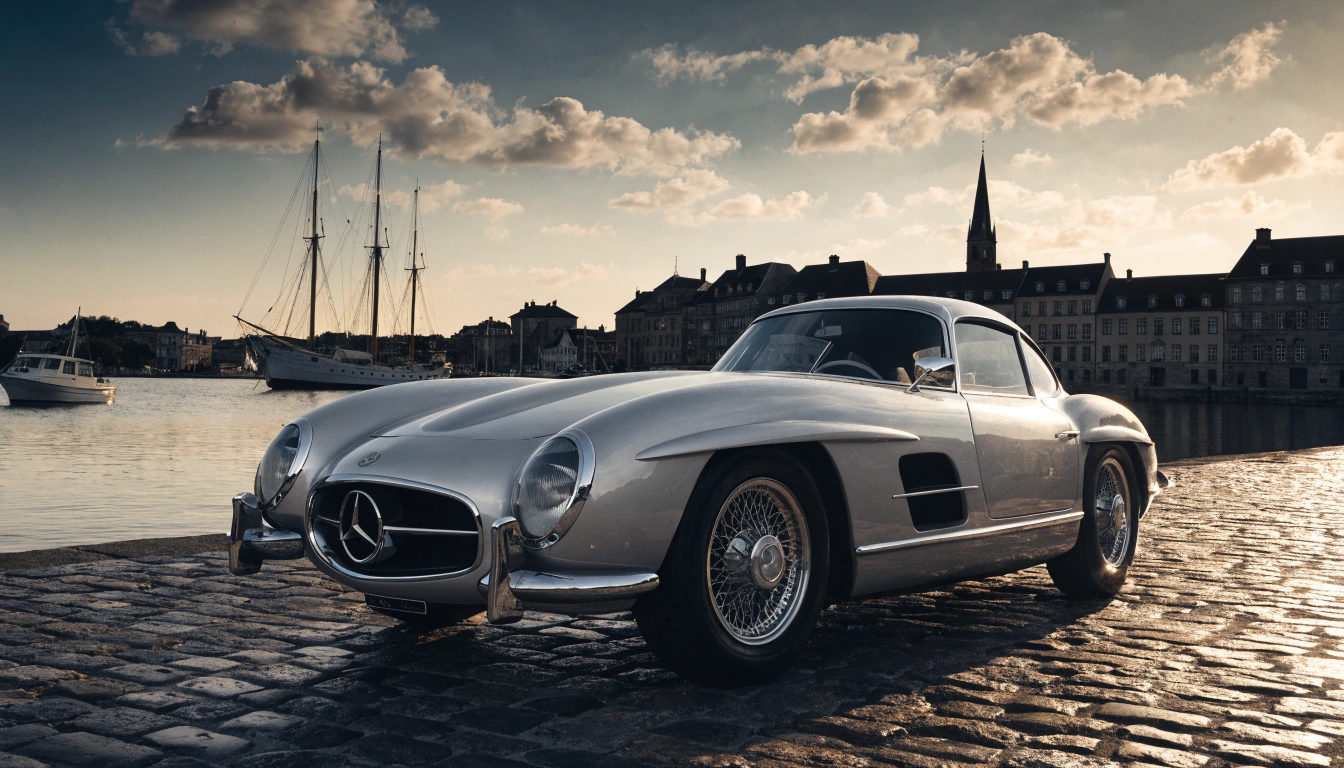
The Mercedes-Benz 300 SLR Uhlenhaut Coupé stands as automotive engineering’s ultimate achievement from the 1950s—a road-legal racing car that combined Formula 1 technology with gullwing elegance, creating what many consider the world’s first hypercar. Built in 1955 at the height of Mercedes-Benz’s motorsport dominance, this extraordinary machine represented the pinnacle of what was technically possible when engineering constraints were pushed to their absolute limits. The Uhlenhaut Coupé, with its revolutionary construction, breathtaking performance, and tragic historical context, became the most expensive car ever sold when it fetched €135 million ($143 million) at auction in May 2022. Clcompany is delighted to explore the facts about this priceless legend that motorsport guru Karl Ludvigsen called “the holy grail” of automotive history.
Flashback
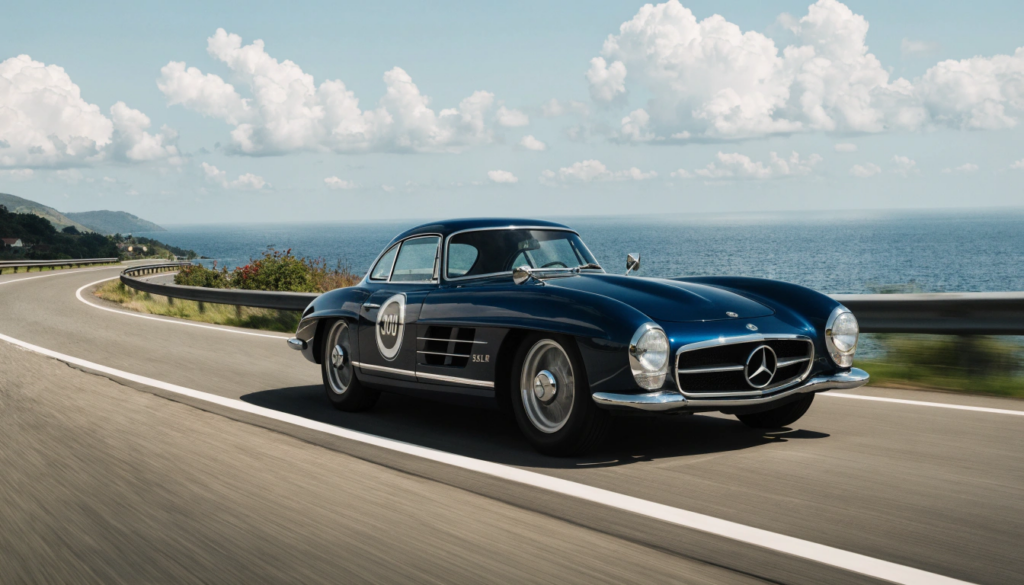
The 300 SLR Uhlenhaut Coupé’s creation began as Mercedes-Benz dominated both Formula 1 and sports car racing in the mid-1950s. The company’s design chief Rudolf Uhlenhaut ordered two of the nine W196 chassis to be converted into road-going coupés, originally intended to compete in the Carrera Panamericana race. However, following the catastrophic 1955 Le Mans disaster, Mercedes-Benz withdrew from motorsport, and the racing coupé project was shelved.
Rudolf Uhlenhaut, the half-English engineer who was head of Mercedes-Benz’s testing department, commandeered one of these cars as his personal transportation. Initial construction of chassis 007/55 took place in December 1955, with the car deemed ready to drive on June 29, 1956, after an Eberspächer silencer was installed.
The car’s basis was pure racing pedigree. The 300 SLR was based on Mercedes-Benz’s championship-winning W196 Formula 1 car, with the engine enlarged from 2.5 to 3.0 liters for sports car racing. The result was the fastest car of its time registered for use on public roads, capable of approaching 290 km/h (180 mph).
Production period – 1955
The Design
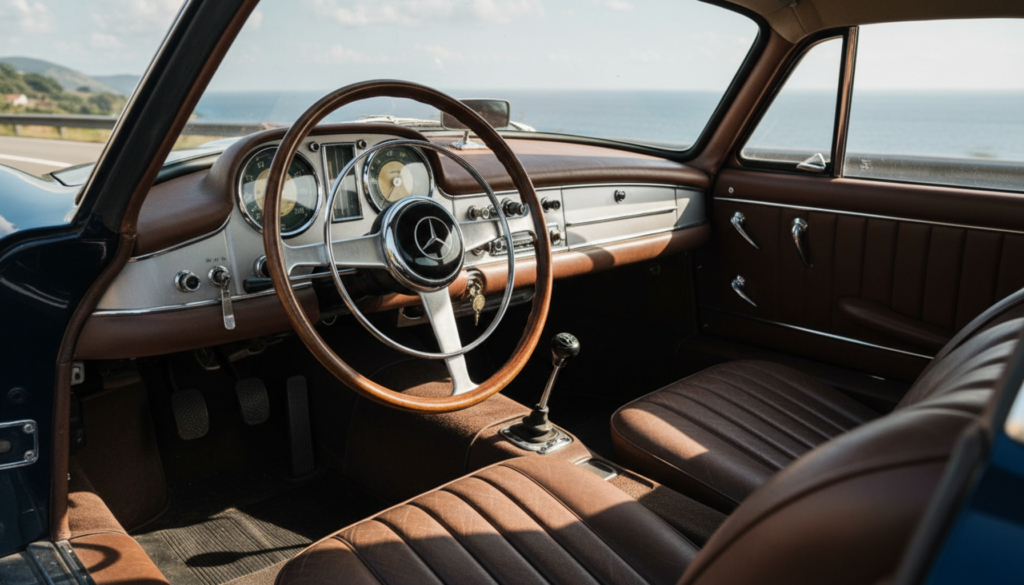
The Uhlenhaut Coupé featured gullwing doors and styling that superficially resembled the 300 SL production car, though it was far more advanced underneath. The body construction utilized ultra-light Elektron magnesium-alloy bodywork—a special blend of magnesium, zirconium, and aluminum with a relative density of just 1.8, less than a quarter of iron’s 7.8. This exotic material choice contributed to the coupé weighing only 1,117 kilograms despite its substantial performance.
The engineering was revolutionary. The 3.0-liter M 196 S straight-eight engine was equipped with desmodromic valves actuated by two overhead cams and an innovative Bosch direct fuel injection system. Desmodromic valve operation, invented in 1896 and still used in Ducati motorcycles today, added complexity with a second set of rocker arms and cam lobes to mechanically close the engine’s valves, eliminating valve spring failure during endurance racing.
The engine also featured a dry-sump lubrication system and chromium-coated aluminum cylinder sleeves, producing over 300 horsepower. Power delivery was sophisticated, with power takeoff from the center of the engine via gear rather than the crankshaft end to reduce torsion.
The chassis employed an elaborate, light and stiff multi-tubular steel spaceframe with torsion-bar springing, parallel wishbones in front, and low-pivot swing axles at the rear. The cockpit position required the driver’s legs to spread wide on both sides of the clutch housing, with a narrow footwell for the passenger. Interior trimming was lavish compared to racing versions, with blue leather and matching tartan cloth seat facings.
Top Specifications of Mercedes-Benz 300 SLR Uhlenhaut Coupé
- Displacement – 2982 cc (straight-eight)
- Power – 302-314 bhp @ 7400 rpm
- Torque – 310 nm @ 5950 rpm
- Transmission – 5-speed manual (rear-mounted)
- Top speed – 284-290 km/h (180 mph)
- Kerb weight – 1117 kg
- 0-130 km/h – Under 7 seconds
Interesting Facts
- Rudolf Uhlenhaut was known for driving the coupé at extreme speeds on public roads. One legendary story recounts how, running late for a meeting, he covered the 220-kilometer journey from Stuttgart to Munich in just 52 minutes—a trip that normally took 2.5 to 3 hours even on the autobahn in the 1950s.
- Journalist Denis Jenkinson, who rode with Uhlenhaut, described the noise inside the coupé as “out of all proportion,” caused by everything running on roller bearings and an enormous train of tiny gearwheels driving the camshafts, magnetos, dynamo, and injection pump. Uhlenhaut simply handed him earplugs and said the noise “could be cured for a few pence”.
- A famous anecdote tells how legendary Formula 1 driver Juan Manuel Fangio once complained the 300 SLR hadn’t been adequately set up and was slowing him down. Uhlenhaut immediately left the meeting, jumped into the 300 SLR still wearing shirt and tie, and beat Fangio’s Nürburgring lap time by 3 seconds. He simply grinned and explained that Fangio required more practice.
- During practice for the Swedish Grand Prix in August 1955, Uhlenhaut drove 122 miles on the track at racing speeds to test the car. The coupé covered over 1,600 miles during its trip to Sweden and back, with different final-drive gears installed for various circuits—geared for 165 mph in Sweden, then regeared to 189 mph for the return trip to Monza.
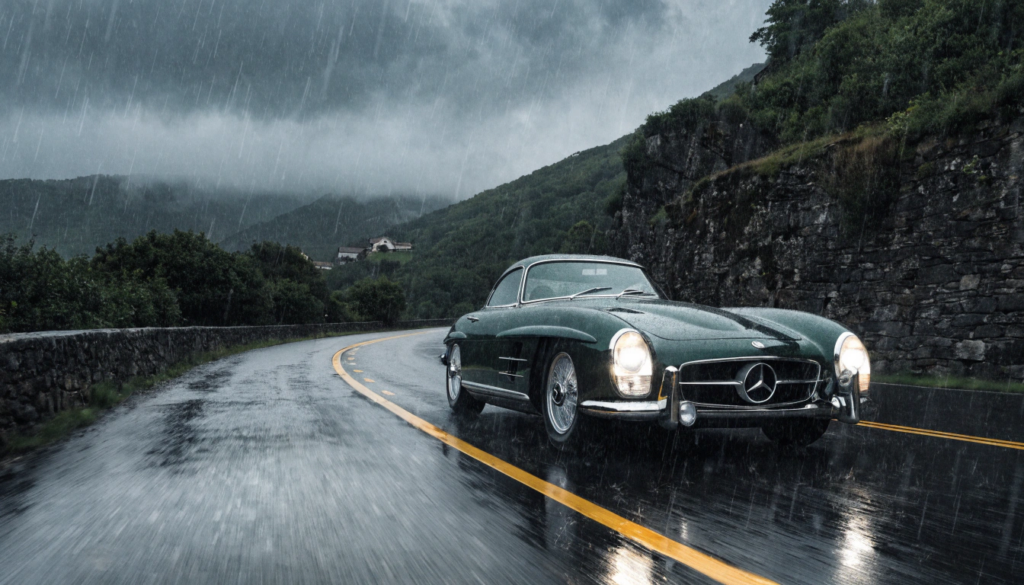
- The magnesium body created a tragic consequence at Le Mans 1955. When workers tried to extinguish the burning 300 SLR with water, they were unaware that water acted as a catalyst, turning the magnesium into a flaming inferno. The disaster killed 84 people including driver Pierre Levegh, leading to Mercedes-Benz’s withdrawal from motorsport
The Legacy
The €135 million sale price in May 2022 made the Uhlenhaut Coupé the most expensive car ever sold, surpassing the previous record of $75 million for a Ferrari 250 GTO. Mercedes-Benz used the proceeds to establish the Mercedes-Benz Fund, and incredibly, the car had been retained by Mercedes since it first left the factory in 1956.
Stirling Moss, who drove the racing 300 SLR to victory at the 1955 Mille Miglia, described it as “the greatest sports racing car ever built—truly an incredible machine”. The Uhlenhaut Coupé represented this greatness made street-legal, serving as the world’s first hypercar—a concept decades ahead of its time where no other street-legal sports car came close in speed, performance, and engineering ingenuity.
Today, one Uhlenhaut Coupé remains in Mercedes-Benz’s collection at the Stuttgart museum, while its sibling resides with an anonymous collector who owns what automotive historian Karl Ludvigsen immediately called “the holy grail” when he heard about the sale. The 300 SLR Uhlenhaut Coupé endures as the ultimate expression of 1950s motorsport engineering—a priceless relic from an era when manufacturers pushed boundaries without modern constraints, creating machines that remain unmatched in their combination of audacity, performance, and historical significance.
Fascinated by automotive legends? You have reached your destination. At CLcompany we have curated pictures, write-ups, and more about the legendary journey of cars. If you are looking to share your thoughts on classic cars, do check out the writer’s section on the CLcompany website.