
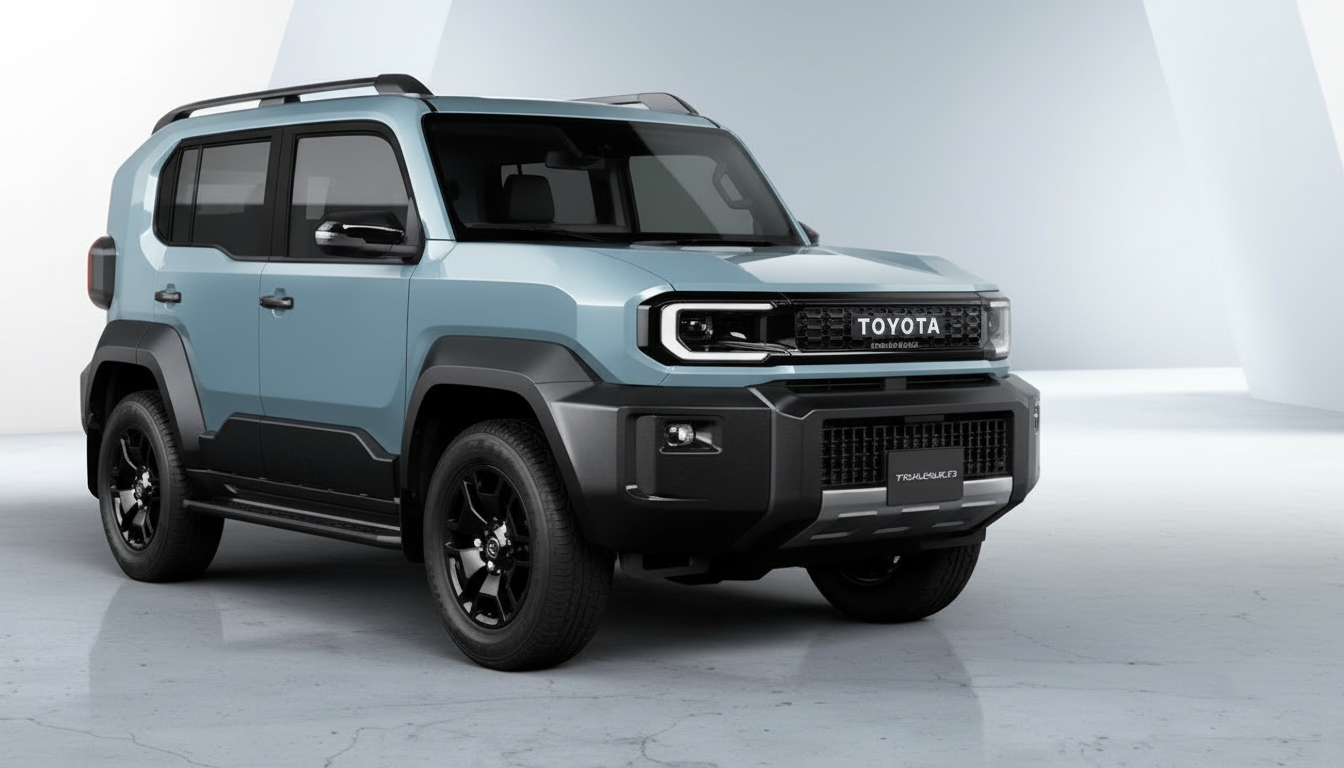
The 2026 Toyota Land Cruiser FJ marks the revival of one of automotive history’s most beloved nameplates, reimagined for a new generation of adventure seekers. As the most compact and accessible member of Toyota’s legendary Land Cruiser family, this rugged SUV combines classic design elements with modern technology and proven off-road capability. The Land Cruiser FJ, with its retro-inspired styling, practical engineering, and affordable positioning, represents Toyota’s commitment to making authentic four-wheel-drive adventure accessible to enthusiasts worldwide. Clcompany is delighted to explore the facts about this highly anticipated modern classic that bridges heritage and contemporary needs.
Flashback
The Land Cruiser FJ’s journey began as whispers and rumors throughout 2024 and early 2025, with enthusiasts speculating about a potential successor to the discontinued FJ Cruiser. Toyota first teased the concept during the global debut of the Land Cruiser Prado, flashing a brief silhouette that sent the automotive community into speculation overdrive. The company internally referred to the project as “500D,” signaling its mission to create an affordable, accessible off-roader.
On October 20, 2025, Toyota officially unveiled the Land Cruiser FJ through a digital reveal, confirming that the legendary FJ nameplate would return—not as a direct FJ Cruiser successor, but as the entry-level model in the refreshed Land Cruiser lineup. The name “FJ” represents “Freedom & Joy,” capturing the vehicle’s mission to bring Land Cruiser capability to a broader audience while emphasizing lifestyle and adventure over pure utility.
The public debut came at the Japan Mobility Show 2025, held from October 30 to November 9 at Tokyo Big Sight, where two distinct variants were showcased—a standard version with C-shaped LED lighting and a customized overseas specification featuring classic round headlights. The enthusiastic reception validated Toyota’s strategy to position the FJ below the Land Cruiser 250 (Prado) and 70 Series, creating a more attainable gateway into Land Cruiser ownership.
Unlike the previous FJ Cruiser built on the luxury-oriented platform, the new Land Cruiser FJ utilizes Toyota’s refined IMV (Innovative International Multi-purpose Vehicle) platform—the same architecture underpinning the Hilux pickup and Fortuner SUV. This strategic decision significantly reduces production costs while maintaining the durability and off-road performance expected from the Land Cruiser badge. Toyota plans to launch the FJ in Japan by mid-2026, with subsequent rollouts to emerging markets across Asia, Africa, the Middle East, and South America.
Years in production – 2026 onwards
The Design
The Land Cruiser FJ’s design philosophy celebrates simplicity, functionality, and nostalgia. Its boxy, upright silhouette immediately evokes the classic FJ40 Land Cruiser, with squared-off proportions emphasizing interior space and cargo capacity. Measuring 4,575mm in length, 1,855mm in width, and 1,960mm in height with a 2,580mm wheelbase, the FJ is notably more compact than the Fortuner yet taller, optimizing interior headroom and vertical cargo space for camping gear and equipment.
The front fascia offers two distinct personalities. The standard version features modern C-shaped LED daytime running lights integrated into rectangular headlamp units, flanking a bold “TOYOTA” grille treatment. The overseas customized specification embraces retro charm with round LED headlights and DRLs, directly referencing the beloved FJ40 and creating an unmistakable classic off-roader appearance. Both versions feature chunky, segmented bumpers—a clever design allowing individual damaged sections to be replaced rather than entire assemblies, reducing repair costs while enhancing customization potential.
The body incorporates pronounced fender flares, short overhangs for improved approach and departure angles, and chamfered edges that create what Toyota describes as a “dice motif”—a geometric, purposeful aesthetic. The rear design maintains the squared theme with vertical taillights and a tailgate that can be optioned with MOLLE (Modular Lightweight Load-carrying Equipment) panels for mounting tactical gear, recovery equipment, and outdoor accessories.
Underpinning the FJ is the refined IMV platform, strengthened with additional chassis bracing to enhance body rigidity for improved handling, comfort, and off-road performance. Toyota engineers conducted extensive testing on challenging terrain to optimize ground clearance, approach and departure angles, and wheel articulation—ensuring the FJ delivers capability “worthy of a Land Cruiser.” The part-time four-wheel-drive system can be engaged or disengaged as needed, providing efficiency in two-wheel-drive mode for urban commuting while offering serious capability when adventure calls.
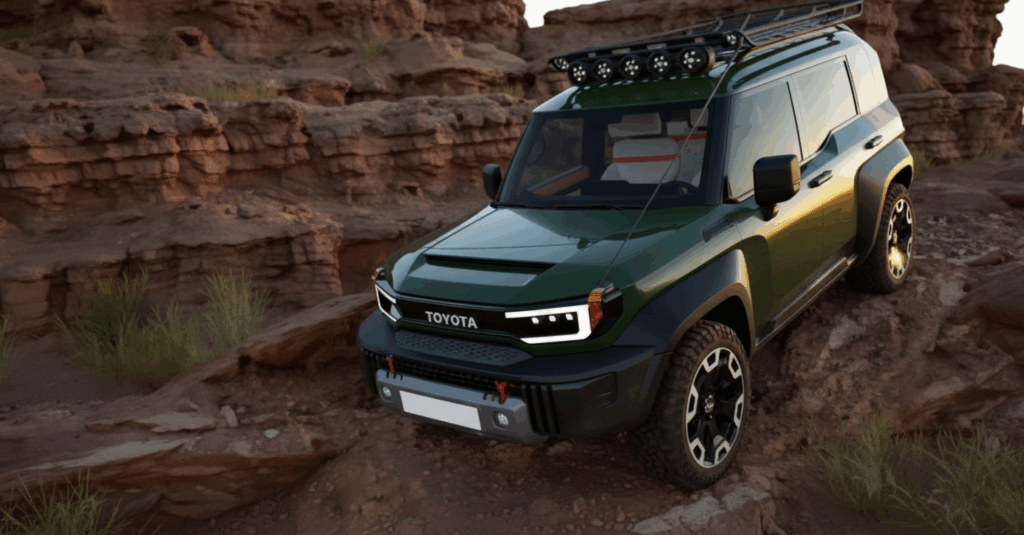
The suspension employs a proven setup with independent front suspension and a solid rear axle, prioritizing off-road articulation and load-carrying capacity. Toyota has confirmed the FJ will offer a wide range of factory-backed accessories including rock rails, snorkels, roof-mounted ARB racks, and customizable bumpers, encouraging owners to build their ideal adventure vehicle.
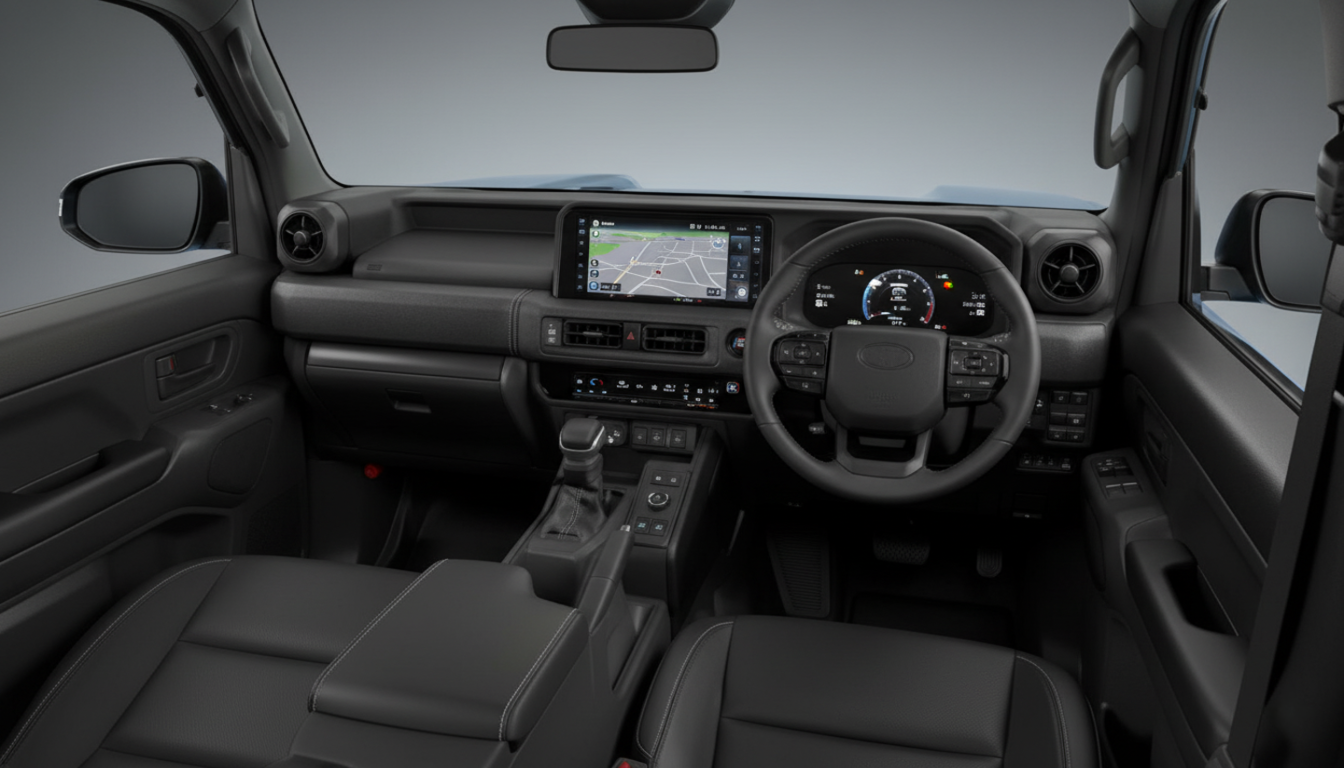
Inside, the cabin blends rugged functionality with modern convenience. A horizontally-oriented dashboard emphasizes the vehicle’s attitude and simplifies operation across varied driving conditions. The interior features a chunky steering wheel, digital instrument cluster, and a large touchscreen infotainment system mounted prominently for easy viewing. Physical controls for climate functions and a tall gear shifter underscore Toyota’s commitment to usability over touchscreen minimalism—essential when operating with gloved hands in extreme conditions.
The cabin utilizes easy-to-clean materials acknowledging the FJ’s adventure-focused mission, with seating for five occupants across two rows. Toyota Safety Sense comes standard, providing adaptive cruise control, lane-keeping assist, pre-collision braking, and other driver assistance technologies—proving that affordability doesn’t mean compromising safety.
Top Specifications of 2026 Toyota Land Cruiser FJ
- Engine – 2.7L 2TR-FE inline-four petrol
- Power – 161 bhp @ 5200 rpm
- Torque – 246 nm @ 3900 rpm
- Transmission – 6-speed automatic
- Drivetrain – Part-time four-wheel drive
- Dimensions – 4575mm (L) x 1855mm (W) x 1960mm (H)
- Wheelbase – 2580mm
Interesting Facts
- The Land Cruiser FJ nameplate honors Toyota’s heritage—the original “FJ” designation appeared in 1955, with “F” denoting the engine series and “J” indicating the vehicle type. By reviving this nomenclature, Toyota directly connects the new model to seven decades of Land Cruiser legacy.
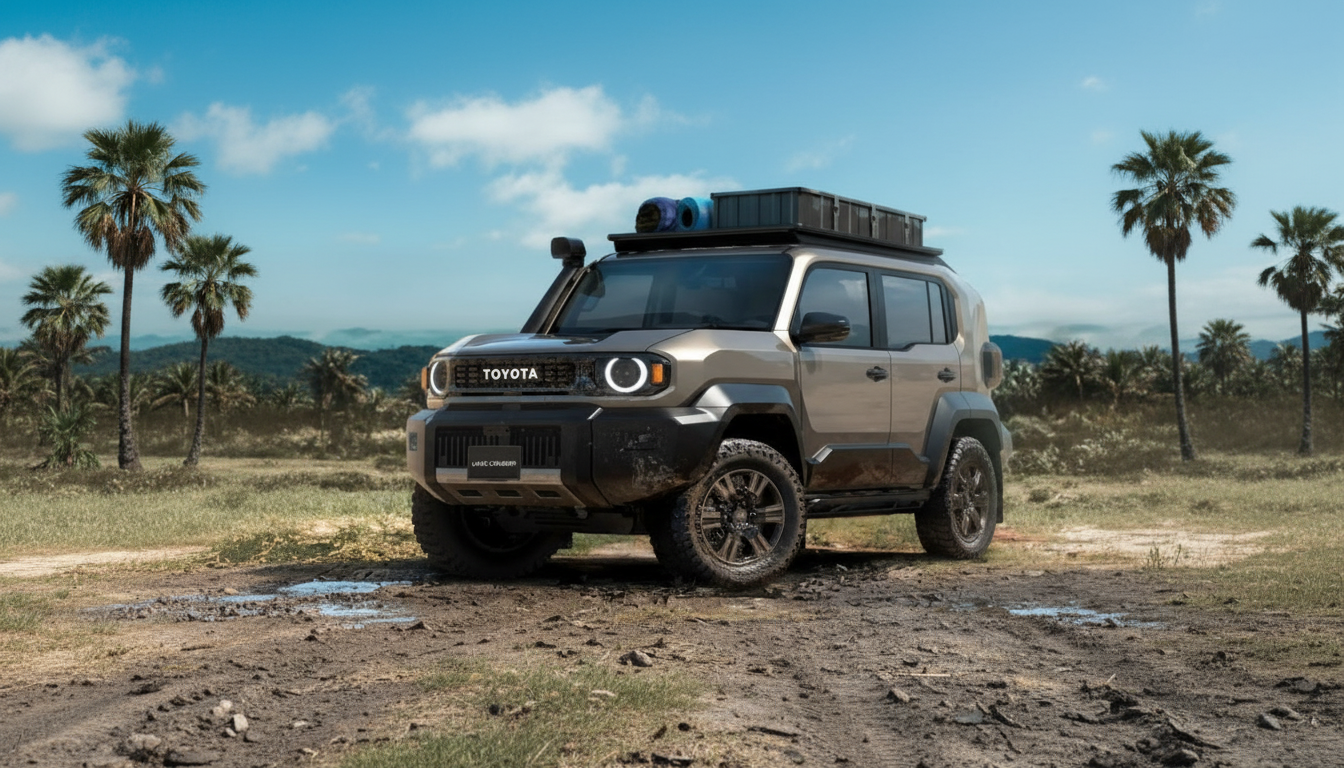
- Toyota revealed two distinct design variants simultaneously—a modern interpretation for the Japanese domestic market and a retro-styled version for overseas markets. This dual-personality approach acknowledges different regional preferences while maintaining the core FJ identity, allowing buyers to choose between contemporary or classic aesthetics.
- The Land Cruiser FJ’s development prioritized repairability and customization from inception. Modular bumper designs, accessible mounting points for aftermarket equipment, and MOLLE panel compatibility reflect Toyota’s understanding that off-road enthusiasts want to personalize their vehicles extensively.
- Despite being the smallest and most affordable Land Cruiser, the FJ maintains water wading capability of approximately 800mm—rivaling much more expensive off-roaders. This specification demonstrates Toyota’s commitment to authentic capability regardless of price point.
- The 2.7-liter petrol engine powering the FJ is far from new—it previously served in the Fortuner and Innova Crysta for Indian markets. This proven powerplant choice prioritizes reliability, parts availability, and ease of maintenance over cutting-edge performance, aligning perfectly with the FJ’s mission as a go-anywhere workhorse.
The Legacy
Though the Land Cruiser FJ has only just been revealed, its significance is already apparent. By creating an accessible entry point to Land Cruiser ownership without compromising capability or heritage, Toyota addresses a critical gap in the market. The FJ arrives as crossovers dominate global sales, yet it proudly embraces body-on-frame construction, solid axles, and genuine four-wheel-drive systems—characteristics increasingly rare in modern SUVs.
The FJ’s positioning as a lifestyle-oriented off-roader targeting younger, adventure-focused buyers could introduce an entirely new generation to the Land Cruiser brand. Its planned availability in emerging markets—where rugged, reliable transportation remains essential—ensures the FJ will likely serve roles far beyond weekend camping trips, continuing the Land Cruiser tradition of supporting communities in challenging environments.
If Toyota confirms plans for markets like India, Australia, and South America, the Land Cruiser FJ could become a volume success story, potentially rivaling competitors like the Mahindra Thar Roxx, Jeep Wrangler’s entry models, and other compact off-roaders. The enthusiastic reception at Japan Mobility Show 2025 suggests Toyota has successfully captured something special—a vehicle that honors the past while embracing the future.
Fascinated by modern automotive legends in the making? You have reached your destination. At CLcompany we have curated pictures, write-ups, and more about the legendary journey of cars. If you are looking to share your thoughts on classic cars, do check out the writer’s section on the CLcompany website.