
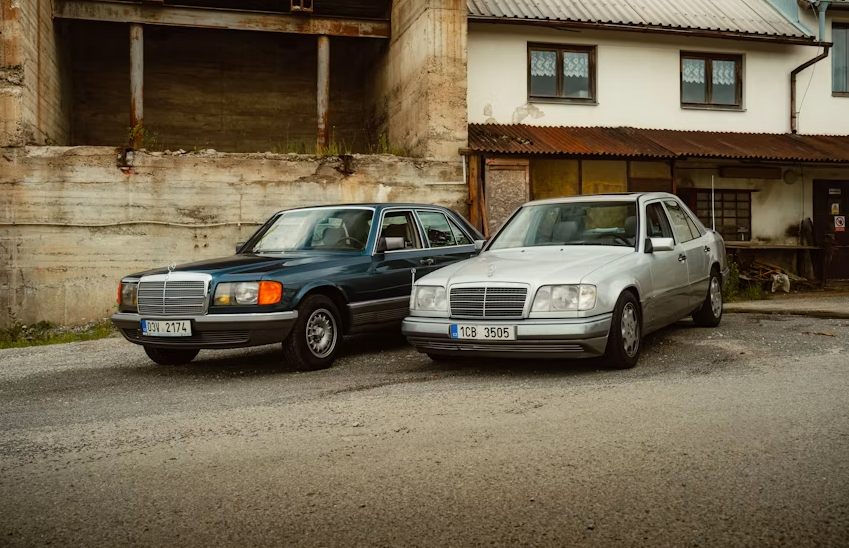
If you ask a car purist what defined the golden age of German performance sedans, chances are the discussion will inevitably take a turn towards the rivalry between two very different automotive capitals. But before the Bavarians unveiled their legendary E30 M3, Stuttgart had already fired a very pointed warning shot at the competition. The 1987 Mercedes Benz 190E 2.3-16 was a homologation special, a performance-oriented executive sedan with sporting intentions.
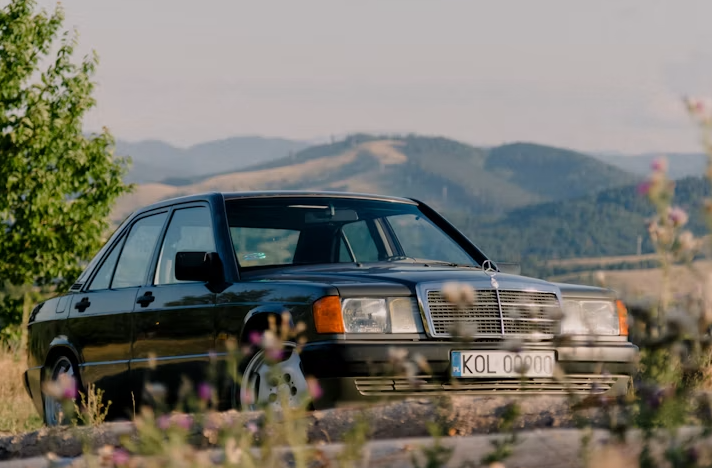
Straight from the production line, the numbers don’t lie. Underneath the hood of the US-spec 1987 model lays a 2.3 liter four-cylinder engine that pumps out a healthy 167 horsepower and 162 pound-feet of torque (or 185 hp for the European non-catalyzed variants). Power is sent exclusively to the rear wheels through a mechanical limited-slip differential. But the best part of this specification has to be the close-ratio Getrag 5-speed manual gearbox with a motorsports-spec “dog-leg” first gear. Weighing in at a mere 2,900 pounds, the 190E 2.3-16 can accelerate up to 60 mph in less than eight seconds. But power wasn’t really the reason to buy this particular Mercedes.
A Motorsport Mandate
The 2.3-16 was actually conceived as a homologation special to compete in the Deutsche Tourenwagen Meisterschaft (DTM), one of the most brutal forms of motor racing in the world: the German Touring Car Championship. The W201 chassis was initially designed with rallying in mind, but when Audi arrived in the rally scene with their rally-shockingly quick Quattro all-wheel drive cars, Stuttgart knew a rear-wheel drive platform would never survive the rough terrain.
Mercedes-Benz decided to turn their attention back to the tarmac, only to find themselves in a dire situation as well – the DTM was just as competitive as the rallying scene, and far more technical. But in order to field a factory team, a certain number of production spec cars needed to be sold to the public. And so, Mercedes-Benz unveiled what would become one of the most legendary performance cars in history.
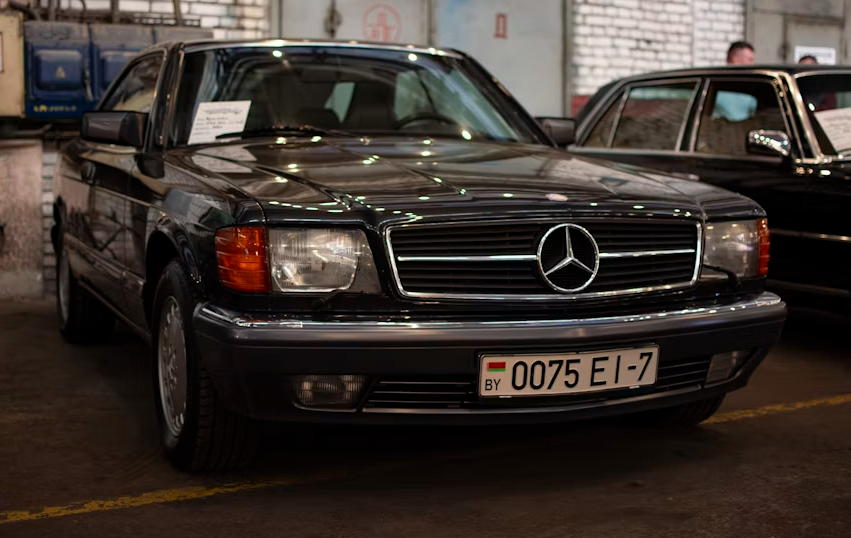
The 190E 2.3-16 proved its abilities long before arriving in showrooms. In 1984, Mercedes staged a Race of Champions exhibition to promote the opening of the newly built Nürburgring GP circuit. The best F1 drivers in the world were invited to the event and given identical 2.3-16 development mules to race against each other. A rookie by the name of Ayrton Senna arrived in his 2.3-16 and absolutely dismantled the competition in the wet conditions, securing his legacy as a motorsport prodigy.
The Cosworth Touch
While Mercedes was known to build some of the toughest and most bulletproof bottom ends in the business, they knew they required an outside organization to give the engine the motorsports touch. The British tuning and engineering company Cosworth came on board to design a high-revving, performance oriented engine. Cosworth started with the cast iron block of the M102 engine and designed a unique light alloy cylinder head with a dual overhead camshaft design and four valves per cylinder (hence the 16 in the model name).
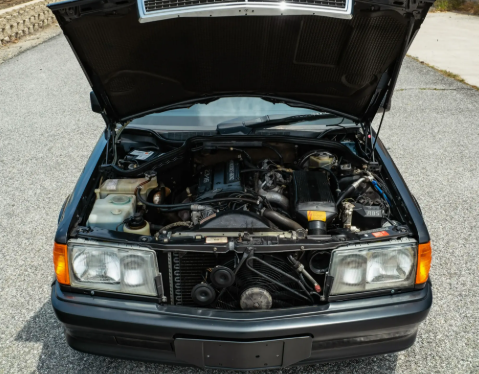
This innovative engine design incorporated a set of low weight pistons and utilized an aggressive bore to stroke ratio that made the engine happy to rev high and often. The 7,000 RPM redline was matched by the equally innovative dog-leg 5-speed manual transmission (the 190E 2.3-16’s gear shifter places first gear down and to the left, with the remaining gears forming a ‘H’ pattern). This powerplant-demands-to-be-driven, and in turn builds a parasitic relationship with any driver willing to keep the RPMs high and carry enough speed through the corners to keep the rear wheels smoking.
Form Dictated by Function
The bodywork of the 1987 190E 2.3-16 exudes aggressive good looks, but it’s all business when it comes to reducing aerodynamic drag and keeping the car’s nose planted on the blacktop. From a design standpoint, the 2.3-16 is the perfect blend of form and function – Unlike modern performance sedans that incorporate fancy air ducts and air intakes that serve no real function, every aspect of the 2.3-16’s wind tunnel tested body kit serves a true aerodynamic purpose. The front air dam, side skirts, rear spoiler, and flared wheel wells all work together to reduce overall drag and lower the coefficient of drag to a frankly terrifying 0.32.
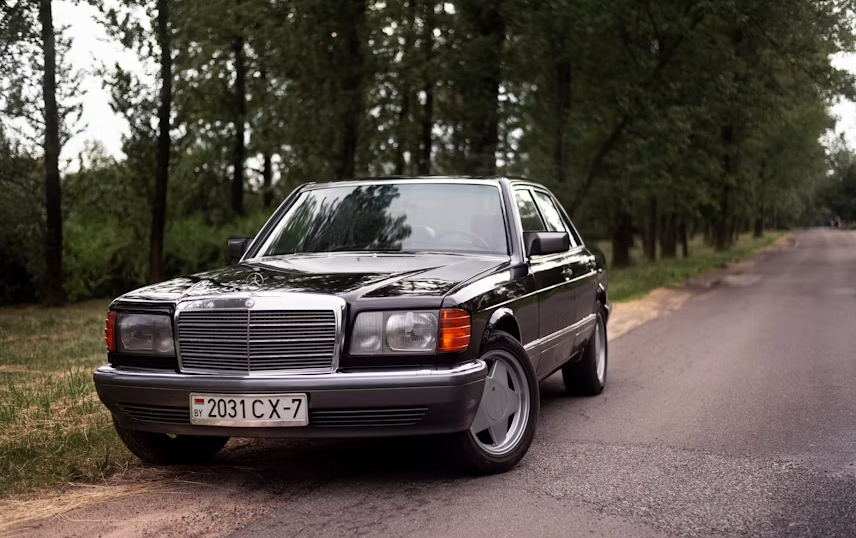
But the real magic lies underneath the hoods and over the axles, where a sophisticated self-leveling rear suspension (SLS) and a complex five link rear end provide a stable and composed feel long before it ever reaches the front end. This allows the thin-rimmed steering wheel to do most of the ‘talking’ to the driver, conveying every imperfection of the road surface with alarming accuracy, but without the usual discomfort of a harshly sprung rear end.
The Legacy Lives On
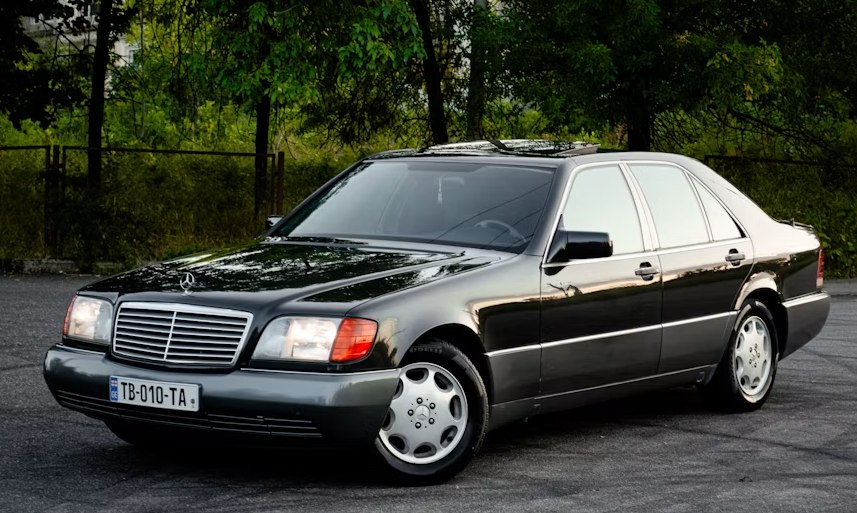
The 1987 Mercedes-Benz 190E 2.3-16 may not check all of the boxes for a modern performance sedan – it lacks the artificially enhanced engine noises and the complex onboard entertainment and navigation systems. But where the 2.3-16 shines is in its old-world engineering and subtlety. A car that is a true driver’s car, the 2.3-16 offers a level of refinement and driving engagement that is seldom seen these days. And for anyone willing to buckle up in those heavily bolstered Recaro front buckets and get acquainted with that wonderful dog-leg gate, the 190E 2.3-16 offers a taste of racing history – and perhaps a lesson or two on the joys of touring car racing.
Fascinated by raw driving experiences and automotive legends? You’ve arrived at the right place. At CLcompany, we share real stories, deep dives, and reflections from behind the wheel. If you’re passionate about cars and have a story of your own to tell, don’t forget to explore the writer’s section on the CLcompany website.