
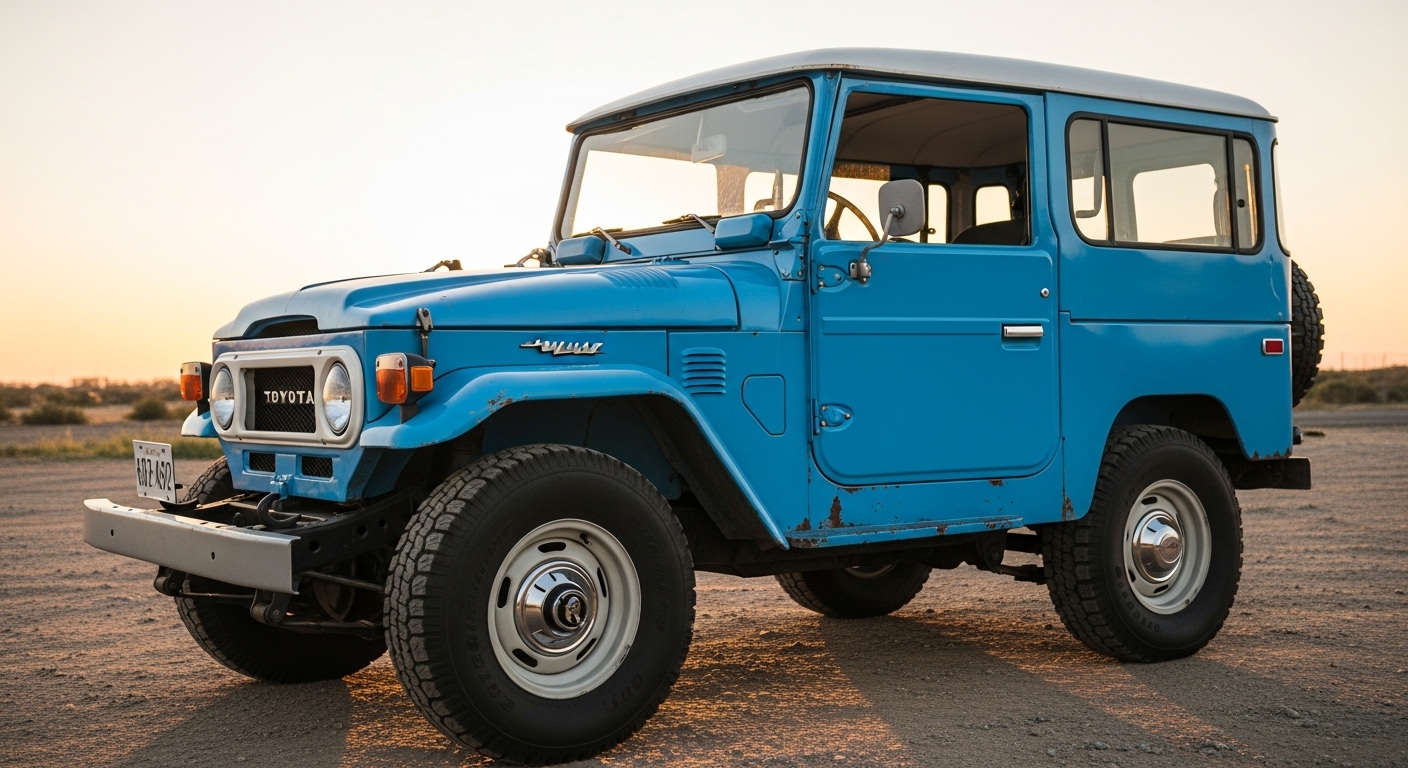
The Toyota FJ series represents one of the most iconic and enduring chapters in off-road vehicle history. Born from post-war necessity and refined through decades of global adventures, the FJ established Toyota’s reputation for building virtually indestructible 4×4 vehicles capable of traversing the planet’s most challenging terrain. The Toyota FJ, with its rugged engineering, timeless utility, and legendary reliability, remains a revered classic among overlanders, collectors, and off-road enthusiasts worldwide. Clcompany is delighted to explore the facts about this legendary vehicle that became synonymous with the Land Cruiser name.
Flashback
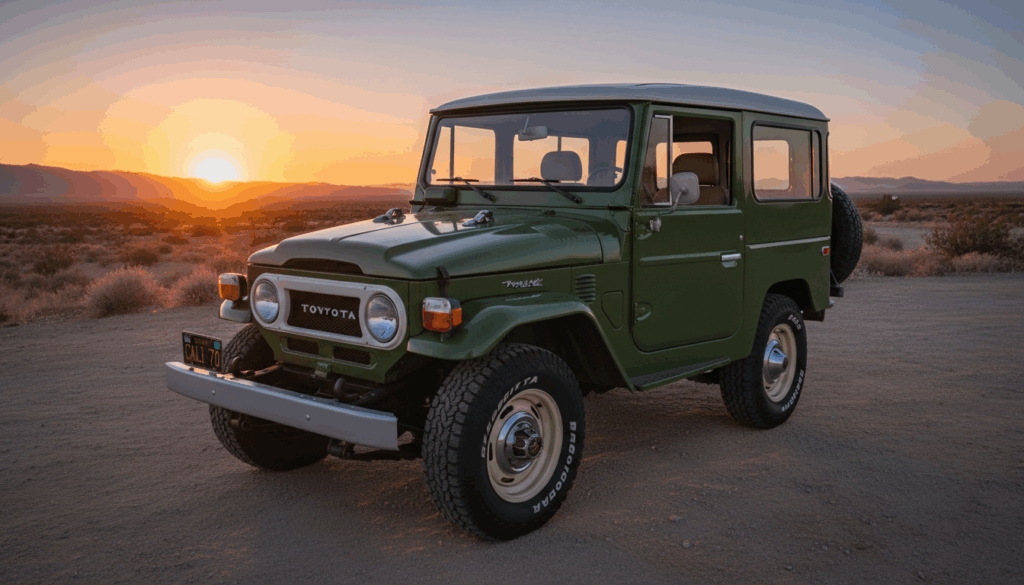
The Toyota FJ’s origins trace back to 1951 when the Japanese National Police Reserve (precursor to the Japan Self-Defense Forces) requested a domestically-produced 4×4 vehicle similar to the American Willys Jeep. Toyota responded by developing the BJ prototype, which impressed military officials by successfully climbing to the sixth station of Mount Fuji – a feat that inspired the “Land Cruiser” name, deliberately echoing the prestige of British Land Rover.
The FJ series emerged in 1955 as Toyota refined the design for broader commercial and civilian markets. The “F” denoted the engine type, while “J” indicated the vehicle series. The FJ25, FJ28, and most famously the FJ40 (introduced in 1960) became the backbone of Toyota’s four-wheel-drive lineup, serving in virtually every environment imaginable – from Australian outback stations to African safari operations, from South American mining sites to Middle Eastern deserts.
These vehicles weren’t merely transportation; they became essential tools for exploration, agriculture, military operations, and aid organizations. The United Nations, Red Cross, and countless NGOs relied on FJ Land Cruisers to reach remote locations where infrastructure barely existed. This global service under extreme conditions forged the FJ’s legendary reputation for reliability and durability.
Years in production – 1955 to 1984 (FJ40 ended 1984)
The Design
The Toyota FJ embodied purposeful, no-nonsense engineering. The FJ40, the most iconic variant, featured a boxy, upright body with flat panels that simplified repairs and replacement. Its distinctive front fascia showcased round headlights, a prominent vertical-slat grille, and a flat hood – design elements that became instantly recognizable worldwide. The removable hardtop or soft-top configuration provided versatility for different climates and applications.
The chassis utilized a rugged ladder-frame construction with live axles front and rear, suspended by leaf springs that prioritized load-carrying capability and durability over ride comfort. This agricultural-grade robustness meant the FJ could handle severe abuse while maintaining structural integrity.
Under the hood, various iterations of Toyota’s F-series inline-six engine powered the FJ lineup. The most common FJ40 variants featured the 3.9-liter Type F engine, later upgraded to the 4.2-liter 2F engine in 1975. These overhead-valve, pushrod engines weren’t sophisticated or powerful by contemporary standards, but they delivered legendary reliability. The 2F engine produced approximately 135 horsepower – modest figures that belied its capability, as low-end torque and mechanical simplicity mattered far more than peak power in the FJ’s intended environment.
Power transferred through a four-speed manual transmission (later models offered five-speed units) to a two-speed transfer case, providing exceptional gear reduction for technical off-road situations. The FJ’s four-wheel-drive system, while primitive compared to modern technology, proved nearly bulletproof in operation.
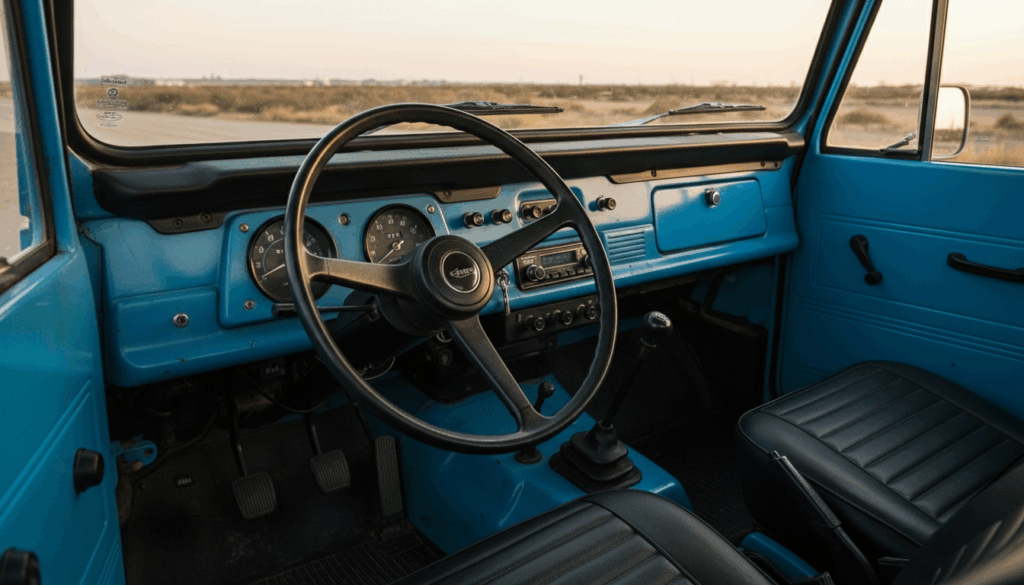
The interior was spartan even by period standards – vinyl seats, minimal soundproofing, basic instrumentation, and straightforward controls. Air conditioning remained optional or unavailable on many models. This simplicity wasn’t a cost-cutting measure but a deliberate design philosophy: fewer components meant fewer potential failures in remote locations where parts and expertise were scarce.
Ground clearance, approach and departure angles, and wheel articulation were optimized for serious off-road work. The FJ could ford water crossings, climb steep inclines, and traverse boulder fields that would strand more sophisticated vehicles.
Top Specifications of Toyota FJ40 Land Cruiser
- Displacement – 4230 cc (2F engine)
- Power – 135 bhp @ 3600 rpm
- Torque – 286 nm @ 1800 rpm
- Transmission – 4-speed manual (later 5-speed)
- Top speed – Approximately 120 km/h
- Kerb weight – 1750 kg
- Wheelbase – 90 inches
Interesting Facts
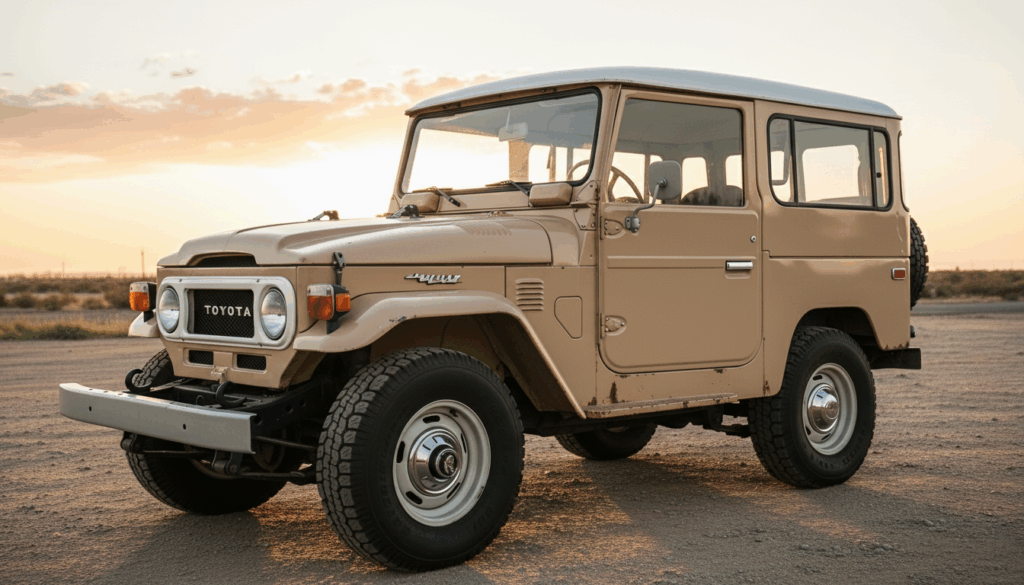
- The FJ40 remained in production in Brazil until 2001, decades after it ceased elsewhere, serving remote fazendas and mining operations where its simplicity and durability remained more valuable than modern features.
- Toyota’s internal testing for the FJ series included deliberately torturous conditions designed to break the vehicles. The FJ’s legendary durability emerged from this brutal development process, where weaknesses were identified and eliminated.
- The FJ40 became the vehicle of choice for overland expeditions, including famous journeys like the 1955-1958 First Overland Expedition from London to Singapore, though that trip used the predecessor BJ series. Subsequent generations of adventurers chose FJ models for circumnavigating the globe.
- Original FJ40 values have skyrocketed in recent years, with pristine restored examples commanding prices exceeding $100,000 at auction. Even rough, unrestored survivors fetch premium prices due to their scarcity and enthusiast demand.
- The FJ40 inspired Toyota’s FJ Cruiser (2006-2014), a modern retro-styled SUV that paid homage to the original’s design language while incorporating contemporary technology.
The Legacy
The Toyota FJ series transcended its role as mere transportation to become a cultural icon representing adventure, reliability, and engineering integrity. While Land Rover may have invented the luxury 4×4 category and Jeep pioneered the military utility vehicle, the FJ established the template for the unstoppable, go-anywhere workhorse that simply refused to quit.
Today, FJ enthusiasts form a passionate global community dedicated to preserving, restoring, and adventuring in these legendary machines. The sight of a well-maintained FJ40 still turns heads and commands respect among those who understand its significance.
Do check out the vintage Fun and Joy.
Fascinated by legendary off-road pioneers? You have reached your destination. At CLcompany we have curated pictures, write-ups, and more about the legendary journey of cars. If you are looking to share your thoughts on classic cars, do check out the writer’s section on the CLcompany website.